
In the United States, about 1% of jury verdicts are changed by judges. This shows how complex the judicial system can be. Knowing when a judge can change a jury’s decision is key to understanding the court’s power.
The power to change a jury’s decision comes from a balance. Juries find the facts, but judges make sure justice is done right. This balance is important for fair trials.
Judges can look at and change jury decisions if there are big legal mistakes. This helps make sure justice is done. It’s a way to protect against unfair trials.
Key Takeaways
- Judges can overrule jury verdicts in rare circumstances
- Judicial oversight protects legal integrity
- Less than 1% of jury decisions are reversed
- Legal errors can trigger judicial intervention
- Maintaining fair trial standards remains key
Overview of the Jury System in the U.S.
The jury system is key in the American legal process. It shows how democracy works through community involvement. These groups help make fair decisions in both criminal and civil cases across the U.S.
Juries are a basic part of justice. They help keep the government in check. They also bring different views into court, letting regular people help decide legal matters.
Purpose in Criminal Trials
In criminal trials, juries do a few important things:
- They look at the evidence from both sides.
- They decide if someone is guilty or not guilty.
- They protect people from the government.
- They show what the community thinks is right.
Purpose in Civil Trials
Civil trials use juries in a special way:
- They help solve problems between people.
- They figure out how much money someone should get.
- They make sure people get fair pay for being hurt.
- They understand complex legal and factual issues.
Jury verdicts show what a group of people think. They help connect legal rules with real justice. By involving community members, the system is open and fair.
Understanding Judicial Authority
The American legal system balances power between judges and jurors. Judges keep things fair and just. They are like guardians of the law.
Judges have special jobs. They can interpret laws and manage the courtroom. They make big decisions that affect the outcome of cases.
Roles of Judges and Jurors
Judges and jurors work together but have different jobs. Here’s how:
- Judges explain laws and guide jurors.
- Jurors look at evidence and decide facts.
- Judges make sure rules are followed.
- Jurors bring community views to legal decisions.
Separation of Powers in the Courtroom
Judicial power is balanced to avoid abuse. The separation of powers keeps things fair. No one group can control everything.
| Judicial Role | Primary Responsibility | Legal Scope |
|---|---|---|
| Judge | Law Interpretation | Legal Guidelines |
| Jury | Fact Finding | Evidence Evaluation |
| Legal System | Justice Administration | Fair Proceedings |
Judicial discretion lets judges make smart choices. This keeps the law fair for everyone. It protects both individual rights and the community.
Grounds for Overruling a Jury Verdict
Judges have a big job in the court system. They can look over jury decisions and change them if needed. This makes sure the law is followed correctly.
Judges can look at a jury’s choice for a few important reasons. These reasons help keep the law fair for everyone.
Insufficient Evidence Challenges
If the evidence from a trial isn’t enough, judges can step in. Insufficient evidence means the facts don’t back up the jury’s choice.
- Lack of credible witness testimony
- Absence of physical or documentary evidence
- Contradictory or unreliable forensic findings
Legal Errors in Proceedings
There can be mistakes in how a trial is run. Legal errors might include:
- Improper jury instructions
- Admission of inadmissible evidence
- Violations of legal protocols during trial
Juror Misconduct Considerations
Judges also check for any bad behavior by jurors. This could mess up the fairness of the trial. Examples include:
- Inappropriate communication between jurors
- External information gathering about the case
- Bias or prejudice affecting decision-making
These reasons show how important judges are. They make sure the law is followed and protect people’s rights by carefully checking jury decisions.
Common Scenarios for Judicial Overruling
Judges can change a jury’s decision in complex cases. This shows how judges balance jury verdicts and their own power.
Judges have a big role in fixing jury mistakes. They can do this to make sure justice is served.
Criminal Case Interventions
In criminal cases, judges can change jury decisions for a few reasons:
- Not enough evidence for the verdict
- Legal mistakes made during the trial
- Constitutional rights were broken
- The verdict goes against the law
Civil Litigation Scenarios
In civil cases, judges have ways to review decisions. Judgment Notwithstanding the Verdict (JNOV) lets them:
- Check if damage awards are fair
- Look at legal points
- Fix any jury mistakes
- Make sure people get what they deserve
These actions show judges carefully think about changing jury decisions. They always aim for fairness and justice.
Legal Terms Related to Jury Overruling
The legal world is full of complex rules. Understanding these rules is key to fair trials.
When a jury makes a questionable decision, the law has ways to check it. Two important steps are Judgments Notwithstanding the Verdict (JNOV) and the appeals process.
Judgments Notwithstanding the Verdict (JNOV)
A Judgment Notwithstanding the Verdict is a strong tool for judges. It lets them:
- Change a jury’s choice if the evidence is not enough
- Keep defendants safe from unfair verdicts
- Make sure trials follow the law
Understanding the Appeals Process
The appeals process is a key part of the law. It lets people challenge court decisions. Important parts include:
- Writing a formal request to challenge the verdict
- Showing legal reasons why the verdict might be wrong
- Asking a higher court to review it
Appellate courts look at trial records closely. They check for legal mistakes that might change the verdict. This careful check helps keep trials fair and consistent.
The Impact of Overruling on Defendants
When a judge overrules a jury’s verdict, defendants face big challenges. The legal process is complex and uncertain. It tests their emotional strength and money.

A retrial adds stress for defendants. Due process is key during these times. It ensures rights are protected while justice is sought.
Potential for Retrial
A retrial brings big challenges for defendants:
- Prolonged legal uncertainty
- More legal costs
- More emotional strain
- Potential damage to reputation
Emotional and Financial Consequences
The emotional impact of an overruled verdict is deep. Defendants may feel:
- Psychological stress
- Increased anxiety
- Potential career disruptions
| Consequence Type | Potential Impact |
|---|---|
| Legal Costs | $50,000 – $250,000 |
| Emotional Stress | High to Extreme |
| Professional Reputation | Significant Risk |
Dealing with judicial oversight needs strength. Defendants must work with lawyers. They need to know their rights and possible outcomes.
Case Studies of Overruling
Court rulings show how judges balance jury verdicts and their own decisions. These examples help us see how judges handle tough legal situations.
At times, judges must correct jury mistakes. This shows how judicial discretion keeps the law fair.
Landmark Criminal Case Examinations
Many criminal cases show the complexity of court decisions. Here are some examples:
- The Central Park Five case, where judges cleared wrongly accused people
- High-profile murder trials with evidence that didn’t match the jury’s verdict
- Times when the jury made mistakes or broke rules
Significant Civil Litigation Overrulings
Civil cases also show judges making tough calls. They might change jury verdicts if the money awarded is too much or if the law was misinterpreted.
- Medical malpractice cases with huge payouts
- Business lawsuits with jury decisions that don’t make sense
- Discrimination cases where how evidence is seen is key
These examples show the fine line between jury verdicts and judges’ decisions. They remind us of the need for fairness in the legal system.
Differences Between Judge and Jury Decisions
The legal system balances a judge’s power and jury verdicts. Both are key to justice, but they decide things differently.
Judges and juries see legal cases in their own ways. Juries look at the facts. Judges understand the law in a deeper way.
Standard of Proof in Legal Proceedings
Legal cases need different levels of proof. In crimes, it’s beyond a reasonable doubt. This means almost absolute sureness. Civil cases need only more than 50% chance of being true.
- Criminal Cases: Highest standard of proof required
- Civil Cases: Lower threshold of evidence
- Expert Testimony: Critical in establishing proof
Legal Interpretation Techniques
Judges do more than just look at facts. They look at past legal cases and laws. They make sure jury decisions follow the law. This keeps things fair and consistent.
If jury decisions don’t match the law, judges can change or reverse them. This way, justice is done right.
Judicial Discretion and Its Limits
Judicial discretion is key in the American legal system. It lets judges make detailed decisions. These decisions balance legal rules with the special needs of each case. This way, judges can use their judgment to protect constitutional rights carefully.
Judges use several ways to make these decisions:
- Evaluating evidence quality
- Interpreting legal statutes
- Considering unique case circumstances
- Protecting defendants’ constitutional rights
Key Factors Influencing Judicial Decision-Making
Judges look at many things when making big legal decisions. They think about past cases, legal rules, and how their decisions might affect others. Judicial discretion is about finding a balance between legal rules and the special needs of each case.
Precedents in Legal Interpretation
Old court decisions guide judicial discretion. By looking at these decisions, judges make sure their rulings are fair and consistent. This shows how complex and important judicial decisions are in protecting rights.
Knowing about judicial discretion helps us understand the legal system better. It shows how judges keep the system fair and just.
The Role of Appellate Courts
When a judge goes against a jury’s choice, the case doesn’t stop. The appeals process is key for those who want to challenge court decisions. Appellate courts are important for checking and possibly changing lower court choices.
Appellate courts mainly look for legal mistakes in the first trial. They don’t try the case again or take in new facts. They just check the legal steps and how they were seen in the first trial.
Navigating the Appeals Landscape
Those unhappy with a court decision have steps to appeal:
- File a formal notice of appeal within strict time limits
- Prepare detailed legal briefs explaining the alleged judicial errors
- Submit supporting documentation from the original trial
- Await the appellate court’s review and possible decision
Potential Outcomes of Appellate Review
Appellate courts can make several choices when reviewing court decisions:
- Keep the original judge’s decision
- Reverse the decision completely
- Order a new trial
- Change the original ruling
The appellate process makes sure judicial decisions are carefully checked. It protects defendants’ rights and keeps the legal system fair.
Public Perception of Jury vs. Judge Decisions
The American judicial system balances jury verdicts and judge oversight. People trust this system to protect rights. They watch how courts handle cases.
How we see legal decisions is complex. Several things affect our views:
- Transparency of legal processes
- Media representation of high-profile cases
- Understanding of judicial discretion
- Perceived fairness of verdicts
Trust in the Judicial System
Judges play a big role in keeping trust. They review jury decisions carefully. The public wants clear reasons for changes.
Media Influence
Media shapes what we know about courts. Dramatic stories can hurt or help trust. Good reporting helps us understand legal decisions.
The mix of jury and judge decisions is interesting. As society changes, so will our views on justice.
The Future of Jury Systems in the U.S.
The American legal world is changing how we have jury trials. New trends are making legal procedures more complex. They challenge how judges make decisions.
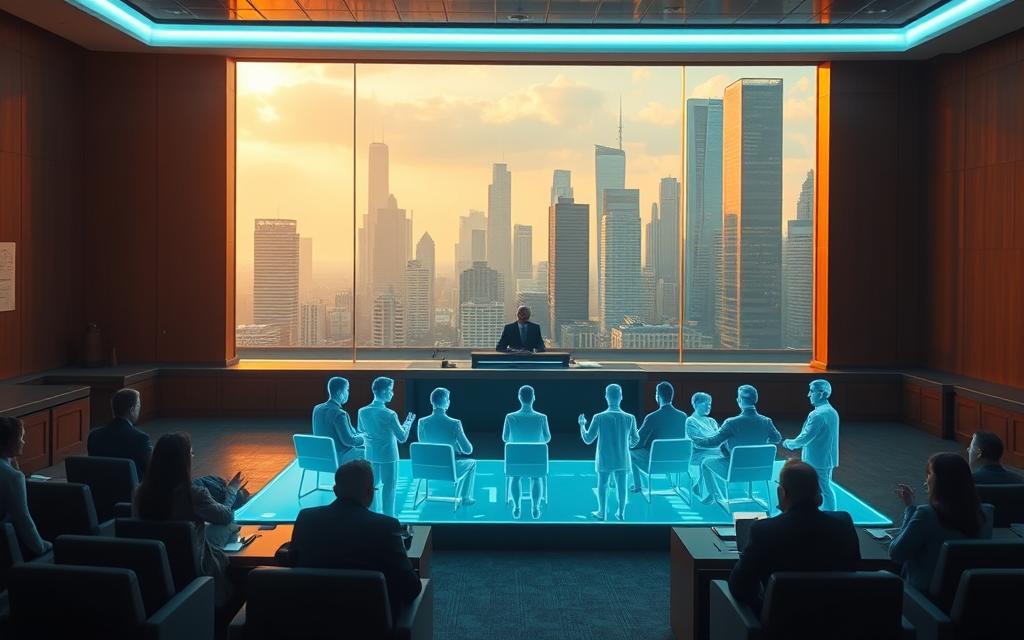
Technology and what people expect are changing the courtroom. The jury system is at a big turning point.
- Declining rates of traditional jury trials
- Increased use of virtual jury selection processes
- Growing emphasis on diverse jury representation
- Enhanced technological integration in courtroom proceedings
Innovative Trial Trends
Technology is changing legal procedures. Courts are using digital platforms for jury selection and more. This makes the legal process easier and faster.
| Trend | Potential Impact |
|---|---|
| Digital Jury Selection | Broader demographic representation |
| Virtual Court Proceedings | Increased accessibility and efficiency |
| AI-Assisted Jury Analysis | More objective jury composition |
Potential Legal Reforms
Legal experts want to make the jury system better. Proposed changes include better ways to pick jurors and more education for them. They want to make sure juries are fair and diverse.
The future of jury systems will mix new technology with old legal values. This will make the judicial process more modern and fair.
Conclusion: The Balance Between Judge and Jury
The U.S. legal system is a complex dance. It balances the power of judges and the voice of juries. When a judge can overrule a jury, it shows how due process protects us.
This balance keeps our justice system strong. It makes sure no one has too much power. It keeps our trials fair and just.
Judges play a big role in keeping laws safe. Juries share community values. But judges check for mistakes or wrongdoings.
The power to overrule a jury is key. It stops bad justice and keeps legal standards high.
Upholding Justice Through Careful Examination
More people now see the fine details of legal decisions. Being open about court actions builds trust. Each time a judge overrules, it’s a deep look at the facts and laws.
As our world changes, so does the law. The work of judges and juries shows how American justice adapts.
The Ongoing Evolution of Legal Interpretation
Knowing about judicial review helps us see how rights are protected. The mix of judge and jury shows the U.S. legal system’s smart way to find justice. It blends community views with strict legal rules.